
What is your safety culture like?
Fourteen statements, about three minutes. Answer as things actually are rather than how you would like them to be. Nobody sees your result but you. It's not intended to be used as a diagnostic tool and further validation would be needed for it to be used in this way. Think of it as a conversation starter rather than a verdict.
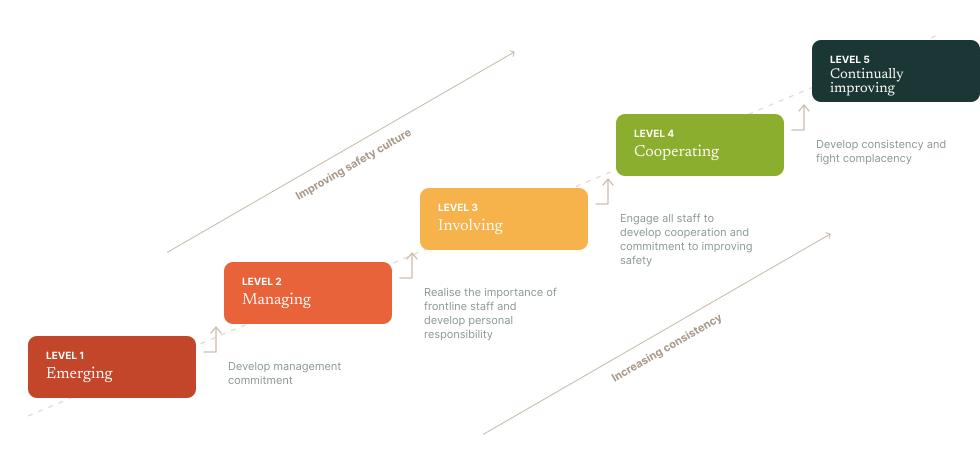
- LEVEL 1EmergingDevelop management commitment
- LEVEL 2ManagingRealise the importance of frontline staff and develop personal responsibility
- LEVEL 3InvolvingEngage all staff to develop cooperation and commitment to improving safety
- LEVEL 4CooperatingDevelop consistency and fight complacency
- LEVEL 5Continually improving
0 of 14 answered
-
Safety is a genuine value at every level; managers treat safety as something to keep improving, not a box that is already ticked.
-
When someone raises a safety concern, it gets ignored or not taken seriously.
-
We use a wide range of safety information to spot problems and take action before someone gets hurt.
-
Understanding of risks is patchy and hazards are underestimated.
-
Frontline workers are actively involved in influencing how we manage safety, for example risk assessments, inspections and improvement ideas.
-
Corners get cut without anyone really questioning it.
-
People feel this is a good, safe place to work and are proud of how safety is handled.
-
When there is pressure to hit deadlines or targets, safety takes a back seat.
-
Health and safety is not seen as a separate topic but is talked about regularly and openly, not just at inspections or after an incident.
-
Health and safety is viewed as something for managers or the safety adviser to deal with.
-
Procedures are actively reviewed and challenged to stay relevant.
-
Once an accident is recorded, nobody looks at it again.
-
Health and safety training is regularly reviewed to make sure it meets people needs.
-
Managers do not give feedback on safety performance or challenge unsafe acts.
Please answer every statement first.
Your safety culture profile
Each point is the average of the two statements in that area, scored one to five.
Want to dig into what sits behind your result? The Safety Culture Checklist walks you through the same seven areas in more depth.
Get the checklistBased on the Safety Culture Maturity Model, prepared by The Keil Centre for the Health and Safety Executive, and the seven areas of the HSE Inspectors Safety Culture Toolkit.